June 24th, 2026
8 Hacks to Select the Best Transformer Materials
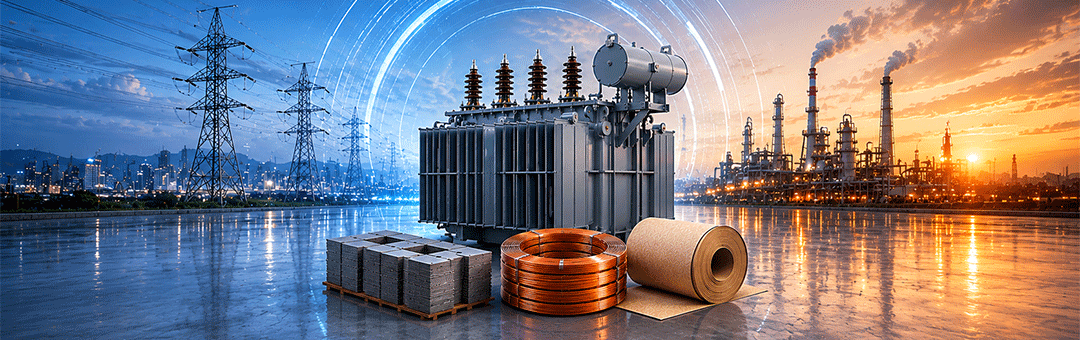
The performance, efficiency, and lifespan of a transformer depend significantly on the materials used in its construction. As any trusted transformer manufacturer in India understands, from the magnetic core and conductors to insulation and cooling components, every material contributes to the transformer’s ability to operate safely and efficiently.
As industries demand more reliable and energy-efficient power solutions, selecting the right transformer materials has become increasingly important.
Core Material Quality
The transformer core is responsible for transferring magnetic flux and plays a major role in determining energy efficiency.
Materials such as grain-oriented silicon steel and amorphous metal are commonly used because of their excellent magnetic properties and low energy losses. A high-quality core helps reduce no-load losses, improve efficiency, and enhance overall transformer performance.
Choice of Conductors
Transformer windings are typically made from copper or aluminum. As a trusted transformer manufacturer in India, it is widely recognized that copper offers superior electrical conductivity, thermal performance, and mechanical strength, making it ideal for high-performance applications.
Aluminum, on the other hand, is lighter and more economical, making it suitable for projects where cost and weight are important considerations. The selection depends on the specific requirements of the application.
For distribution transformer applications, the choice of winding material plays a crucial role in ensuring efficiency, durability, and reliable power distribution across networks.
Insulation Materials
Insulation is essential for preventing electrical failures and ensuring operational safety. Materials such as kraft paper, pressboard, epoxy resin, and advanced synthetic insulations are widely used in transformer manufacturing.
The chosen insulation must withstand operating temperatures, moisture exposure, and electrical stress while maintaining long-term reliability.
Thermal Performance
Heat generation is unavoidable during transformer operation. Therefore, materials with good thermal conductivity and heat resistance are preferred.
Effective thermal management helps maintain efficiency, prevents premature aging of components, and extends the service life of the transformer. Proper material selection ensures that the transformer can operate reliably under varying load conditions.
Cooling System Compatibility
Transformers rely on cooling systems to regulate temperature and maintain safe operation. Materials used in the transformer must be compatible with cooling mediums such as mineral oil, natural ester fluids, synthetic esters, or air-cooling systems. Compatibility is crucial to avoid chemical degradation, corrosion, or reduced insulation performance over time.
Mechanical Strength and Durability
Transformers often experience mechanical stresses during transportation, installation, and operation. A reliable transformer manufacturer in India ensures that the selected materials are strong enough to withstand vibrations, thermal expansion, and fault conditions without compromising structural integrity.
Durable materials contribute to higher reliability and reduced maintenance requirements throughout the transformer’s lifecycle.
Environmental Considerations
With growing emphasis on sustainability, environmental factors are becoming increasingly important in transformer design.
Manufacturers are adopting recyclable materials, eco-friendly insulating fluids, and energy-efficient core technologies to reduce environmental impact. Compliance with industry standards and environmental regulations also influences material selection decisions.
Cost and Long-Term Value
While premium materials may increase initial manufacturing costs, they often provide significant long-term benefits through improved efficiency, reduced energy losses, and lower maintenance expenses. Therefore, material selection should focus not only on upfront costs but also on the overall lifecycle value of the transformer.